
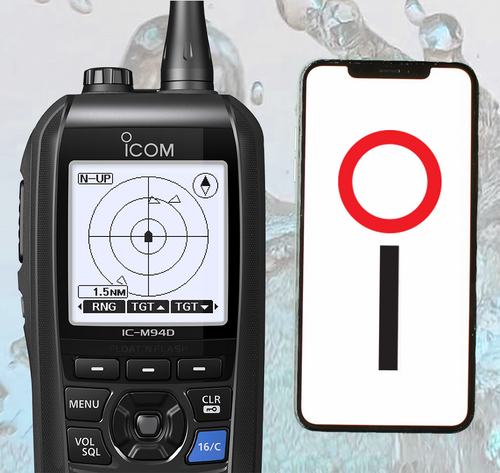
Why Your Cell Phone Can’t Replace a Marine VHF Radio for Boating Safety
When it comes to marine communication, every experienced boater, sailor, or angler knows one thing: you should never head out on the water without a marine VHF radio. While a cell phone can be useful, it should only be considered a backup—not your primary safety device.
Despite the marketing hype suggesting cell phones can replace VHF marine radios, the U.S. Coast Guard and maritime safety experts strongly disagree. In fact, relying only on your cell phone in a marine emergency can put lives at risk.
Radio-programming-motorola-entel-sailor-icom-standardhorizon-service/
Why VHF Marine Radios Are Essential for Safety
1. Coast Guard Emergency Monitoring
The U.S. Coast Guard continuously monitors VHF Channel 16, the international hailing and distress frequency, 24/7. They do not monitor cell phone calls.
With a VHF radio, your emergency broadcast is heard instantly by the Coast Guard and by every vessel within range—greatly increasing your chances of quick assistance.
2. Built for Harsh Marine Environments
Marine VHF radios are engineered for the sea. High-quality brands like Icom offer handheld and fixed-mount radios that are fully waterproof (JIS8/IPX8), built to military-grade durability, and in many cases, float with flashing locator lights if dropped.
Cell phones? Most will fail instantly if submerged.
3. Greater Communication Range
-
VHF marine radios: 20–30 nautical miles (line of sight)
-
Cell phones: Limited to coastal cell tower coverage
When you’re far offshore, a VHF radio ensures you can still reach help even when your cell signal is gone.
4. Vital Ship-to-Ship Communication
A VHF radio lets you listen to and communicate with all nearby marine traffic—essential for receiving navigational warnings, distress alerts, and routine boating information.
Cell phones isolate you to one-on-one calls, leaving you out of the loop.
The Life-Saving DSC Feature
Modern VHF radios include Digital Selective Calling (DSC), which can send an instant distress signal with your GPS location to the Coast Guard and all DSC-equipped vessels nearby—just by pressing the red distress button.
How to activate DSC for your boat:
-
Register your MMSI number (free via BoatUS.com)
-
Program the MMSI into your radio
-
Test your DSC function before trips
Weather Alerts You Can Rely On
VHF radios give you continuous access to NOAA marine weather channels and automatic severe weather alerts—no internet required. Some models even have flashing weather alert strobes for high visibility.
Real-Life Safety Scenario
You’re taking on water in heavy seas.
With a cell phone:
-
You must know who to call
-
Hope they answer
-
Accurately give your position
With VHF DSC:
-
One press sends your exact GPS location and distress alert to all vessels nearby and the Coast Guard—instantly.
Marine Safety Checklist
-
✅ Carry a waterproof, floating VHF marine radio
-
✅ Register and program your MMSI number
-
✅ Keep your radio on Channel 16 while underway
-
✅ Carry a cell phone as backup only
-
✅ Test all communication gear before departure
Radio-programming-motorola-entel-sailor-icom-standardhorizon-service/
A cell phone is a convenience.
A VHF marine radio is a lifeline.
If you value your safety and your crew’s, make your VHF radio your primary communication tool on the water—and keep your cell phone for backup.
Need help choosing or programming the best marine VHF radio for your boat?
Contact our marine communication specialists today for a free consultation.
Radio-programming-motorola-entel-sailor-icom-standardhorizon-service/